Mrs. William had a good baby. He never cried and his clothes were always clean. Mrs. Briggs was very surprised and said, "When my daughter was small, I gave her a lot of food, but she cried a lot and her clothes were always dirty. Why is your baby so different? How do you do him?"
"Well," answered Mrs. Williams, "My first child was a boy. I always gave him a lot of food, He got very fat, and his stomach was always full. He cried a lot and was dirty. Now, I give my new baby much less and
Tuesday, February 26, 2013

Jack's New Neighbor
Jack was a young sailor. He lived in England, but he was often away with his ship.
One summer, he came back from a long voyage and found new neighbors near his mother's house. They had a pretty daughter and Jack soon loved her very much.
He said to her, "My next voyage will begin in few days' time, Gloria. I love you, and I'll marry you when I come back. I'll think about you all the time, and I'll write to you and send you a present from every port."
Jack's first post was Freetown in Africa, and he sent Gloria a parrot from there. It spoke five languages.
When Jack's ship reached Australia, there was a letter from Gloria. It said, "Thank you for the parrot, Jack. It tasted much better than a chicken."
(Taken from : Intermediate Reading Comprehension, L.A. Hill)
Magic Mirror
So there are three girls: an ugly redhead, a fat brunette, and a dumb blonde.
The three girls are at a historical inn. They stop to take a tour. The onnkeeper showed them a mirror. He said that if you tell a lie in front of it, you disappear.
The ugly redhead goes up to the mirror and says "I think I'm pretty" and POOF! She disappears.
Then the fat brunette goes up to the mirror and says "I think I'm slim" and POOF! She was gone too.
Then the dumb blonde goes up to the mirror and says "I think" and POOF! She was gone.
New Baby
A women is sitting at home entertaining her parents who have come around to congratulate her on the birth of their first grandchild.
"So when can wee see the baby?", asks the grandmother.
"In a little while", replies the mother.
Some time passes. The grandparents are looking quite anxious at this point.
"So, when can we see the baby?", asks the grandfather.
"When the baby starts crying.", replies the mother.
The grandparents turn to look at each other, a little perplexed and ask, "Why do we have to wait until she starts crying?!"
The mother snaps back, "Because I put her down somewhere this morning and I can't remember where she is!"
Michael, The Schoolboy
Okay, students. Listen to me. I have a good story. The story is about a boy named Michael. He was ten years old. He wasn't a very good pupil. Why? Because he didn't like doing his homework. What did he like then? Oh, he liked playing in his leisure time. He liked football very much. Do you know why he didn't like doing his homework? Because he always made a lot of mistakes when he did it.
Well, one day, his mathematics teacher looked at Michael's homework and found that all his homework was correct. Wow, that's a good job! Of course students, the teacher was very pleased and surprised. So, he called Michael to his office and said to him, "Michael, you have got all your homework right this time. You're ding great. Well done, Michael. Did your father help you?"
"No, sir." Michael said, "Usually my father did it for me. But last night he was very busy. He had a meeting. So, he couldn't do my homework. Then, I had to do it by myself."
(Adapted from: Intermediate Reading Comprehension, L. G. Alexander)
Monday, February 25, 2013
The Diversity of Tea
There are actually many different drinks that go by the name "tea". Each tea has its own unique characteristics in terms of the cultivation method, production process, and the part of the tea plant used. Here we introduce each type of Japanese tea, their characters, and the drinking methods recommended in order to enjoy their full distinctiveness.
Matcha
 Matcha is made out of tea cultivated in a field hidden from the direct rays of the sun for over 20 days by a straw mesh. After the tea buds are steamed and dried, the greens are separated from the veins to make tencha, and then the tencha is ground in a hand-operated stone mill to create the fine powder we enjoy as matcha. Grown in a dim environment, matcha has limited astringency and contains high amounts of theanine, which gives it a rich, full-bodied flavor. When making matcha, add water of about 80 degrees to the tea and whisk it with a chasen.
Genmaicha
 Genmaicha is created by mixing well-roasted brown rice with sencha or bancha (the larger fresh tea leaves judged unsuitable for sencha). It is most common to mix brown rice with an equally balanced sencha or bancha. On occasion, roasted white rice is used in place of brown rice to bring out a different flavor. Delicious genmaicha is made by mixing the tea with boiling water and steeping it for only a short time. It is said that the relaxing properties of genmaicha come from its plentiful vitamin B1.
Gyokuro
 As with matcha, gyokuro is also grown in a field covered with straw mesh for over 20 days. After steaming the tea buds, gyokuro leaves are rolled and simultaneously dried. Gyokuro is renowned as a luxurious tea with a rich flavor and strong taste. To fully enjoy its flavor, steep the tea in water heated to the comparatively low temperature of 50-60 degrees. Pour it into a small tea bowl, and then run a small amount of it back and forth over your tongue, contemplating the complexity of the taste.
Kukicha
 Kukicha is created from the fresh stems let over when making other teas such as gyokuro or sencha. Depending on the type of tea, the taste of kukicha differs slightly. The tea's aroma is distinct and clear, and it contains a high amount of theanine. Steeping kukicha in water heated about 80 degrees will cause it to give off a delightful smell. Among the different types of kukicha, the ones made from the stems of gyokuro, known as Karigane or Shiroare, are prized as being high-grade.
Sencha
 The most well loved green tea of Japan, between 70 and 80 percent of the tea cultivated in the country is made into sencha. Grown without any shading, it is made by steaming the fresh picked buds and rolling them while they dry. Characterized by its vibrant green color, sencha's pleasant aroma is best brought out by steeping it in water heated to around 80 degrees. One can enjoy both the astringency and sweetness of tea in a cup of sencha. There are many kinds of sencha depending on the producing areas, such as fukamushi sencha which is steamed for 1-2 minutes.
Hojicha
 Hojicha is made out of sencha, kukicha and other teas bu subjecting them to extensive roasting until they change their color. This process gives hojicha a distinct, fragrant aroma. Like genmaicha, hojicha should be prepared by steeping it in very hot water for a short time. The roasting process through which hojicha is made causes it to lose most of its caffeine, creating a fresh tasting tea with little bitterness and astringency. The low caffeine content also makes it suitable for the elderly and small children.
text by Uji Yumiko on The Essence of Tea
Matcha
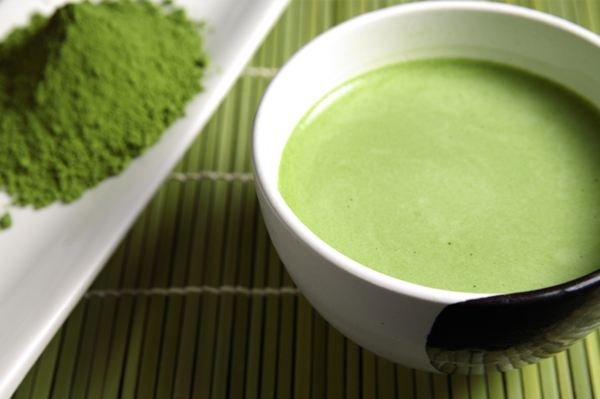 Matcha is made out of tea cultivated in a field hidden from the direct rays of the sun for over 20 days by a straw mesh. After the tea buds are steamed and dried, the greens are separated from the veins to make tencha, and then the tencha is ground in a hand-operated stone mill to create the fine powder we enjoy as matcha. Grown in a dim environment, matcha has limited astringency and contains high amounts of theanine, which gives it a rich, full-bodied flavor. When making matcha, add water of about 80 degrees to the tea and whisk it with a chasen.
Genmaicha
 Genmaicha is created by mixing well-roasted brown rice with sencha or bancha (the larger fresh tea leaves judged unsuitable for sencha). It is most common to mix brown rice with an equally balanced sencha or bancha. On occasion, roasted white rice is used in place of brown rice to bring out a different flavor. Delicious genmaicha is made by mixing the tea with boiling water and steeping it for only a short time. It is said that the relaxing properties of genmaicha come from its plentiful vitamin B1.
Gyokuro
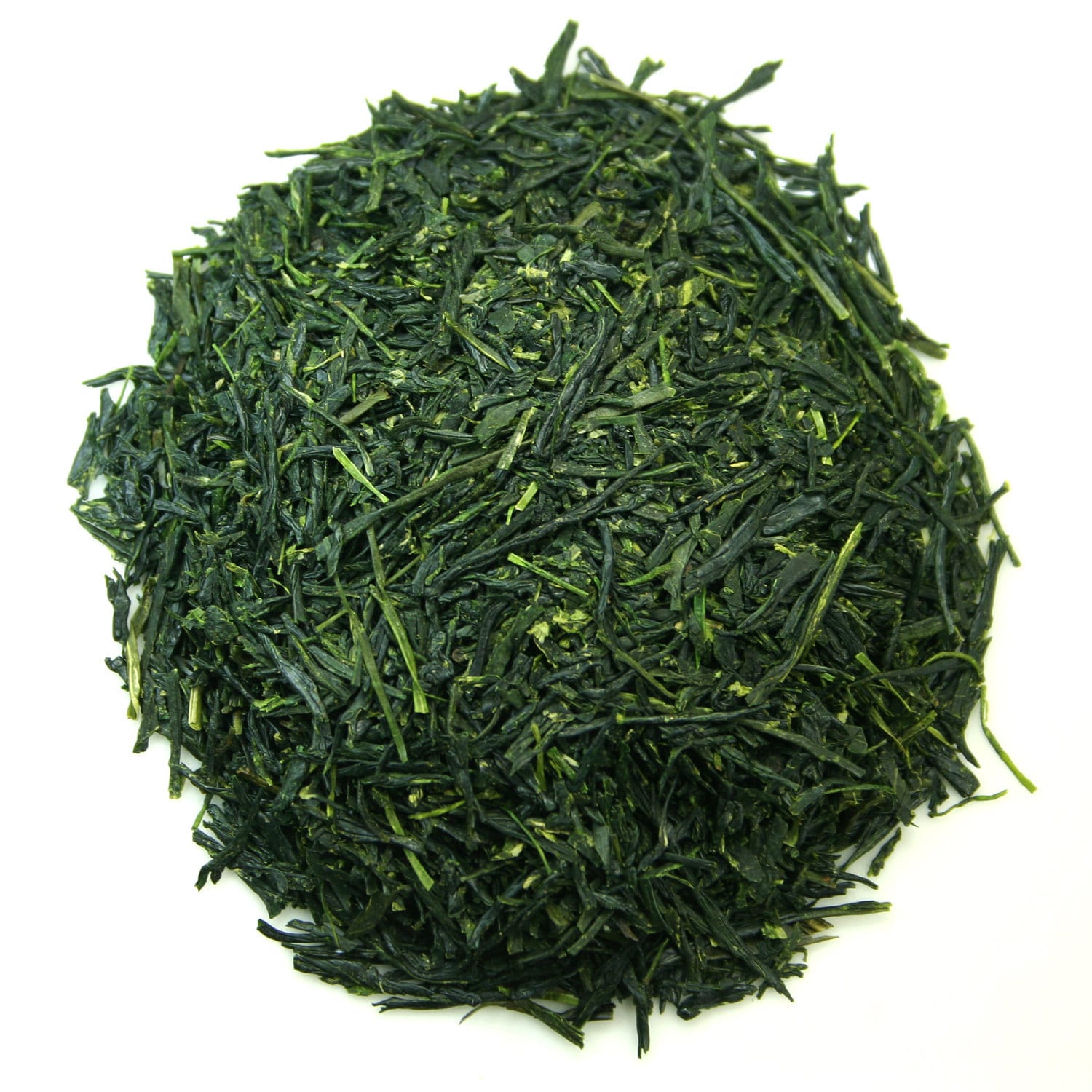 As with matcha, gyokuro is also grown in a field covered with straw mesh for over 20 days. After steaming the tea buds, gyokuro leaves are rolled and simultaneously dried. Gyokuro is renowned as a luxurious tea with a rich flavor and strong taste. To fully enjoy its flavor, steep the tea in water heated to the comparatively low temperature of 50-60 degrees. Pour it into a small tea bowl, and then run a small amount of it back and forth over your tongue, contemplating the complexity of the taste.
Kukicha
 Kukicha is created from the fresh stems let over when making other teas such as gyokuro or sencha. Depending on the type of tea, the taste of kukicha differs slightly. The tea's aroma is distinct and clear, and it contains a high amount of theanine. Steeping kukicha in water heated about 80 degrees will cause it to give off a delightful smell. Among the different types of kukicha, the ones made from the stems of gyokuro, known as Karigane or Shiroare, are prized as being high-grade.
Sencha

Hojicha
 Hojicha is made out of sencha, kukicha and other teas bu subjecting them to extensive roasting until they change their color. This process gives hojicha a distinct, fragrant aroma. Like genmaicha, hojicha should be prepared by steeping it in very hot water for a short time. The roasting process through which hojicha is made causes it to lose most of its caffeine, creating a fresh tasting tea with little bitterness and astringency. The low caffeine content also makes it suitable for the elderly and small children.
text by Uji Yumiko on The Essence of Tea
Subscribe to:
Posts (Atom)
